Times watched: first time
Method: streaming
Was released in: 2013
Wow, it sure did not take long for my other personal interests to intersect with my movie reviews. Before we start, content warning for very brief mentions of murder. Now: in short: I think making a movie out of the 1993 West Memphis Three case was a mistake, especially in the way it was done.
In longer: In West Memphis, Arkansas in 1993 three boys were horrifically murdered and brutalized. Shortly after, three then-teenagers—who became known as the “West Memphis Three”—were arrested and later convicted for the crime, with one of the teens receiving the death penalty. It was an extremely horrific, messy case that happened right at the tail end of the “Satanic Panic,” just a few years after the infamous McMartin preschool trials had finally ended; before the West Memphis murders, many thought the hysterical, overblown fears about ritual abuse and Satan-worshipping teenagers were finally over. Unfortunately, the West Memphis 3 case prolonged the Satanic Panic for years.
There are so many details in the WM3 case: statements, retractions, trial records, witness testimonies, recantations of witness testimonies, junk science, actual science, re-testing of original evidence, paperwork trails, new interviews of old witnesses, and endless appeals. It’s way too much information to try and give even a basic overview within the format of a two-hour dramatic film, and yet Devil’s Knot tries, despite the existence of the three-part documentary Paradise Lost, which is far more comprehensive and delivers the full story without taking any creative liberties, as well as the book Devil’s Knot, from where the film gets its name, by Mara Leveritt (if you’re interested in this case, I highly recommend both the book and documentary more than this movie).
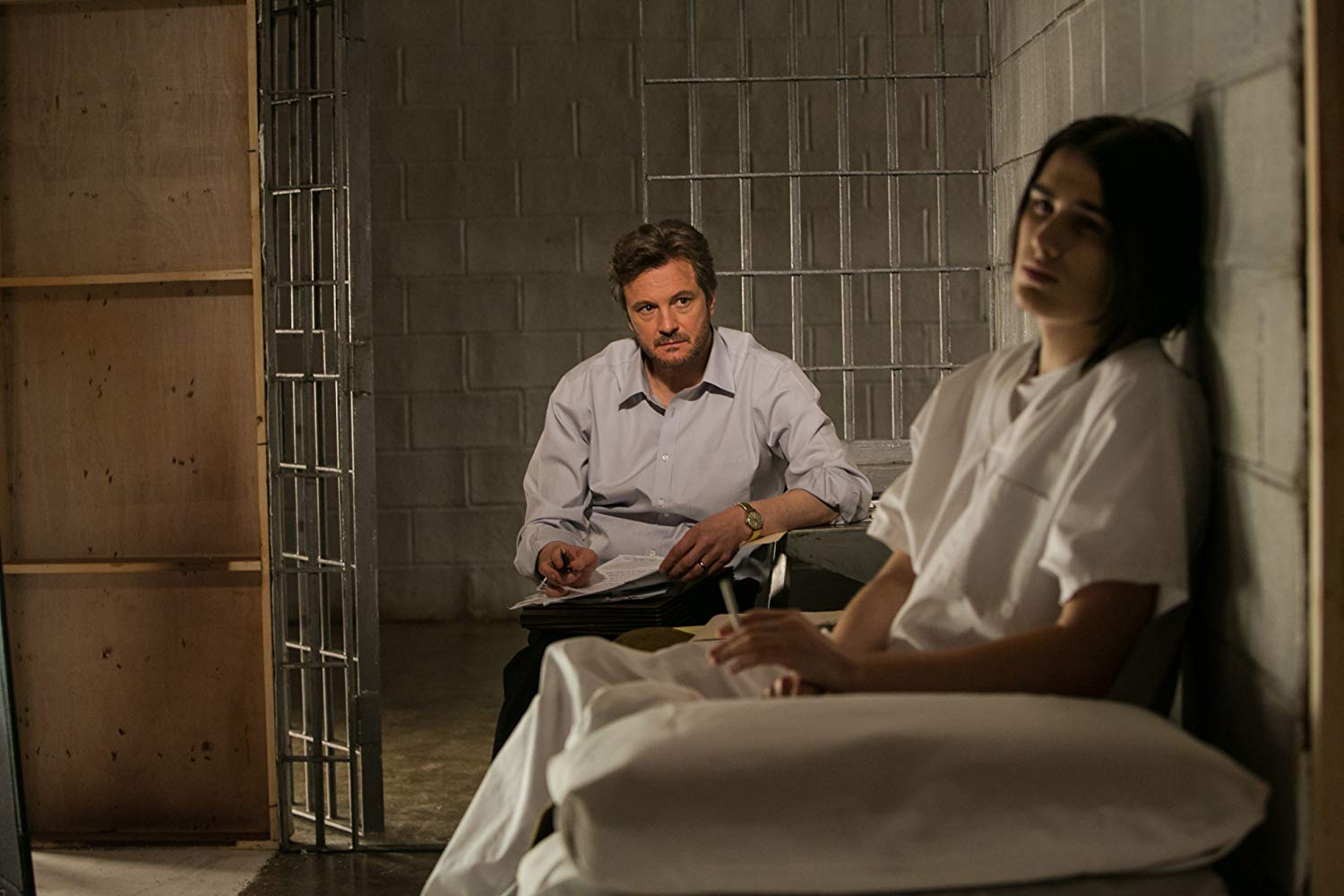
Devil’s Knot makes a valiant attempt to stuff the entire story in two hours of runtime by using every form of storytelling available, which clouds the already cluttered narrative. We have Colin Firth and Reese Witherspoon as Ron Lax and Pam Hobbs (I swear to God I didn’t know her first name until the last twenty minutes of the movie, and she’s the main character) acting as our audience surrogates, Witherspoon as the mother of one of the murdered boys, and Firth as an attorney who takes an interest in the case. But besides two main characters to follow, the audience is also given on-screen dates, names, and information, as well as the occasional voice-over excerpts that we later find out are from a child’s testimony of the crime. This last storytelling technique is especially baffling, since we later find out that he was lying (due to pressure from his mother and the police) and that none of what he said was true. And yet it’s this kid’s statements that open the film—describing how the three young boys were taken and murdered, and how this kid witness (allegedly) had to participate in the murders. Besides none of this being true, at the beginning we don’t know who the fuck is talking, or what he’s talking about—the murders haven’t even happened yet! It’s all very muddled and hurriedly delivered, so the audience doesn’t have any time to absorb the facts of the case themselves, much less the emotional horror of the crimes.
Almost at the halfway point of the movie, these confusing filmmaking decisions come to a head in one of the most unnecessary and frustrating scenes ever put to film. Here’s how it goes: we get an exterior shot of the courthouse, and on-screen text tells us that the judge has decided that one of the teenagers arrested for the murders (Jessie Miskelly Jr.) will have a trial separate from the other two (Damien Echols and Jason Baldwin). Immediately transition to an interior of a courtroom, and the judge says, “Jessie Miskelly Jr. will be tried separately from Damien Echols and Jason Baldwin,” at which point Ron Lax leans over to Pam Hobbs and tells her, “Jessie’s getting a separate trial from Damien Echols and Jason Baldwin,” and then the scene ends. This scene is three minutes long, and for some bizarre reason the audience was spoon-fed the exact same information three times in three separate ways. Nothing in the rest of the movie is repeated in such a manner again, not for the brief scenes introducing the initial suspects, the arrests of the three teenagers, the blatant leading interrogating and illegal tactics of the police, and not even when Pam Hobbs begins to suspect that her husband, who had previously appeared in only three scenes, might have actually been the one to kill their son and his two friends. For some reason, all of those events in the movie are treated with the same amount of weight; nothing besides the decision to divide the trials of the teenagers is emphasized or reiterated. This could all just be bad filmmaking, but I also suspect another culprit: the West Memphis Three case is an example of some of the absolute worst police investigation ever recorded in the past century. Part of what made the Paradise Lost documentaries so good was that the filmmakers highlighted the inhumane, illegal actions and sloppy investigation done by police in order to have the three teenagers arrested and convicted as quickly as possible, and the documentaries eventually led to the three being released from prison in 2011 (not scot-free, unfortunately—but that verdict has its own bullshit, and is much too complex to get into here). Devil’s Knot takes no such stance on the police conduct, or on the guilt or innocence of the three teenagers, or who really killed the three young boys; it presents a lot of information, hints at different theories, and in the end settles on none of them. There’s nothing wrong with films that take a moderate, non-biased approach, but if the information presented was delivered so much better in book and documentary form, and its dramatized retelling isn’t particularly well done or compelling, then I don’t understand what the point of Devil’s Knot is—and I don’t think it knows either.
Bulletpoint points:
- Firth is sporting a wonderful Southern accent, which was the most pleasant thing in the entire movie, and also the only pleasant thing in the entire movie.
- If you are planning on checking out Paradise Lost, be warned: the documentaries show crime scene photos and footage, including the bodies of the young boys, and no punches are pulled when describing exactly what was done to them. Please, please view with discretion.
- Interestingly, the film references the men behind the documentary, Joe Berlinger and Bruce Sinofsky; before a courtroom scene we’re introduced to them through Witherspoon’s Pam, as she learns they’re making a documentary about her son’s case. The men aren’t named, and are never seen or mentioned again in the movie, so their sole purpose seems to be the film acknowledging that the documentaries exist, I guess?
 Hyperfixation Film Reviews